The Visual Arts Map of South Africa
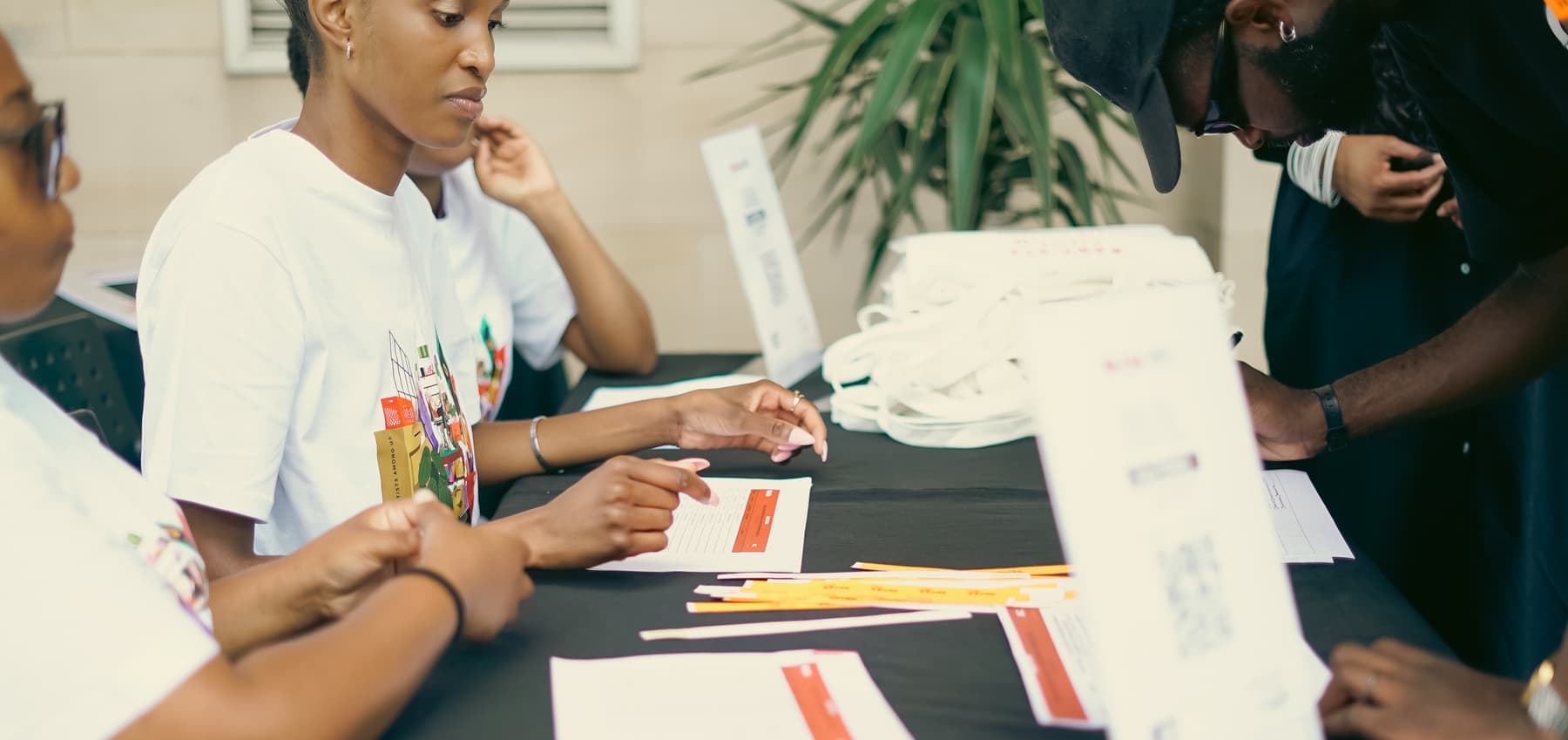
South Africa’s visual arts story is incomplete until every practitioner is on the map.
Mapping successfully closed
Received for the 2026 national baseline report
Thank you, visual arts sector: every artist, organisation and space that came forward. We are now completing the package for the national baseline report, which is coming soon, and its timelines will be announced. If you would still like to help your ecosystem, you can keep adding your details. New entries will not form part of this baseline report, but they will help shape the next phase of VACSA’s work.
Add your details
South Africa’s visual arts story is incomplete until every practitioner is on the map.
Mapping successfully closed
Received for the 2026 national baseline report
Thank you, visual arts sector: every artist, organisation and space that came forward. We are now completing the package for the national baseline report, which is coming soon, and its timelines will be announced. If you would still like to help your ecosystem, you can keep adding your details. New entries will not form part of this baseline report, but they will help shape the next phase of VACSA’s work.
Add your detailsWhere each province stood at the close
Tap your province on the map. It’ll show where it stands against the minimum of 170.
Where every province stands
1 662 mapped for the 2026 baseline, against a national target of 1 530 (170 in each province).
Close the gap
Who is not on this map yet?
An artist who is not on this map does not appear in the numbers that reach the Department. You know people we will never find on our own.
Give us a name. We will do the reaching.
We contact the artist, not you. Your address is only so we know who to credit.
Why this matters
In the groups and gatherings, we are thousands. But when VACSA sits with government, this map is the book we open: the evidence base for advocacy, planning, partnerships and funding.
Representation is placed on the map, not assumed. This isn’t about one province outpacing another. It’s about every practitioner, and your province, being counted in full in the national picture.
Are you among us?
1 662 practitioners are on this map. Check with your ID, or add your details.
Used only to look you up, never stored by this page.
New entries help VACSA’s sector intelligence and future work; they are not part of the 2026 baseline report.
Every province against the minimum of 170. The dashed line is that minimum; green means it is met, and the count keeps going.
The national picture at a glance: artists, galleries, recent activity and province coverage.
From emerging to legacy: where South Africa’s mapped artists are in their journey.
How South Africa mapped month by month: where it surged and where it slowed.
Provisional figures: monitoring and evaluation has not yet begun, so these numbers are raw, self-reported and not yet verified; totals may change once the data is cleaned. No personal details are shown.
Explainer
Questions about Constituency Mapping?
Everything you might ask before you map yourself. Read it, or listen to the part you need.
Constituency Mapping is VACSA's national initiative to identify and understand South Africa's visual arts community. Rather than guessing at the shape of the sector, it builds an accurate, evidence-based picture of who is practising, where they are located, the disciplines they work in, and the opportunities and structural challenges they meet day to day. It is the deliberate move from assuming what the sector looks like to knowing it for a fact.
A sector cannot be effectively represented if it is not accurately understood. Mapping provides the concrete evidence VACSA needs to advocate with authority: to guide strategic planning, build partnerships, support research, and design programmes that answer the real needs of practitioners. Put simply: you cannot fight for what you cannot prove, and this is how we gather the proof.
Everyone working within South Africa’s visual arts sector, not only artists at the centre, but the full ecosystem that holds it up. That means visual artists, sculptors, ceramic artists, photographers and printmakers, and equally curators, arts educators, gallery owners, arts organisations and collectives. Independent practitioners, students and emerging artists are specifically invited. If your work lives in this sector, you belong on the map.
No. Mapping is open to everyone working in the visual arts. Membership is not required and there is no gatekeeping. The inclusivity is the point: the picture is only accurate if everyone is counted, member or not.
About 10 to 15 minutes. It is a one-time entry, a small investment of your day against a significant gain in the sector’s visibility.
Every registration strengthens the understanding and representation of the sector. The more complete the picture, the more precisely VACSA and its partners can read provincial needs, locate the gaps in support, and plan interventions that land where they are needed. The reverse is the real risk: if your details and your particular challenges are not in the data, those needs stay invisible and go unaddressed at a national level. Your participation feeds the collective strength of the whole sector.
No, and we want to be transparent about that. Mapping is not a funding application or a grant programme, and registering does not put money in your hand tomorrow. It is a national research and engagement initiative designed to establish where the gaps are, so that equitable funding and better resources can be argued for, with evidence, in future. It builds the structural foundation on which support can be won.
Your information is handled responsibly and used only to support research, planning, communication and sector development. It is not sold, and it is not shared outside those authorised purposes. Your data is held on VACSA’s POPIA-aligned database.
Yes. The database is meant to be living. If your practice evolves, your contact details change, or you move, you can update your record so the national picture stays accurate and grows alongside your career.
Help your province grow. The strongest thing you can do next is invite other visual arts practitioners in your network to map themselves. Peer-to-peer encouragement is how a province’s count becomes accurate and powerful. Every additional registration sharpens the picture for your region.
The provincial progress tracker shows how mapping is advancing across South Africa, and where more practitioners still need to be counted so that every province is represented equitably. When a province lags (rural areas especially), its local ecosystem stays practically invisible in the national picture. Encouraging others to map is how your region makes itself count.
The full explainer
Listen to the whole thing (7:58)
- 0:00Welcome to today's explainer.
- 0:01We are diving into something absolutely crucial
- 0:03for South Africa's visual arts sector right now,
- 0:06and that is answering your biggest questions
- 0:08about constituency mapping.
- 0:10Whether you're an independent creator
- 0:11who's just starting to make your mark
- 0:12or you're running a massive established arts institution,
- 0:15this initiative is a real game changer
- 0:17for the entire visual arts ecosystem here in South Africa.
- 0:20We're going to enthusiastically unpack exactly
- 0:23what this whole project actually means for you, how the process works, and why it is quite literally essential for the future of the
- 0:29sector.
- 0:30To kick things off, I want you to think about this idea for a second.
- 0:33A sector just cannot be effectively represented if it is not accurately understood.
- 0:39That powerful little insight right there, that is the foundational principle driving the
- 0:43visual arts cluster of South Africa or VACSA's latest initiative.
- 0:47You see, right now, to properly advocate for our visual arts ecosystem, we need a crystal
- 0:52clear picture of what's actually happening on the ground.
- 0:54We have to stop relying on guesswork.
- 0:56We need the hard evidence to build a stronger future, and this mapping project is the definitive
- 1:00first step to entirely change how the sector is represented.
- 1:04So here's our roadmap for today.
- 1:07We're going to hit 5 key areas to clear up the most frequently asked questions.
- 1:11First, what exactly is constituency mapping?
- 1:14Second, who should participate?
- 1:16Third, why your participation actually matters?
- 1:19Fourth, we'll tackle the nitty gritty of privacy, funding, and updates.
- 1:24And finally, we'll look at your province's progress.
- 1:27Okay, section one.
- 1:29What is constituency mapping?
- 1:31It's really the most logical place to start this explainer, right?
- 1:35If you've heard this specific term buzzing around the arts community recently,
- 1:38you definitely aren't alone.
- 1:40But it's super important we get a handle on precisely what it entails.
- 1:43So here's the core of it. Constituency mapping is VACSA's massive national initiative designed to identify and deeply understand
- 1:51South Africa's visual arts community. Think of it like a giant puzzle. It's about building a
- 1:55comprehensive, accurate picture of who is out there practicing. It tracks where practitioners are
- 2:00physically located, what specific disciplines they're pouring their energy into, and crucially, what unique opportunities and structural challenges they're running into every single day.
- 2:10It's essentially the process of moving from just guessing what the sector looks like,
- 2:14to actually knowing it for a fact.
- 2:16Which naturally leads us to our next fundamental question.
- 2:19Why is VACSA going through all this trouble?
- 2:21Beyond just, you know, collecting a bunch of information,
- 2:25what is the underlying strategic motivation here?
- 2:27Well, it boils down to this.
- 2:29You can't fight for what you can't prove.
- 2:32Mapping provides the concrete evidence required for meaningful action.
- 2:35By gathering all this data, VACSA can actually launch real targeted advocacy.
- 2:40It guides strategic planning helps build robust partnerships, supports deep research, and
- 2:44lets them design future programs
- 2:46that respond to the actual needs of practitioners.
- 2:49It's all about securing the factual foundation they need to demand proper
- 2:52infrastructure and support across the entire country.
- 2:55Moving right along to section two, who should participate?
- 2:59These are easily two of the most common logistical questions we see popping up.
- 3:04Who is this mapping actually built for?
- 3:06And is there some sort of gatekeeping?
- 3:08Like, do you need to hold an official VACSA membership
- 3:11to even be counted?
- 3:12The answer to the membership question
- 3:14is a massive resounding no.
- 3:17You absolutely do not need to be a VACSA member.
- 3:20The sheer inclusivity of this project
- 3:21is kind of the whole point.
- 3:22It's open to literally everyone working
- 3:24within South Africa's visual arts sector.
- 3:26We're talking visual artists, sculptors, ceramic artists, photographers, and printmakers,
- 3:30but importantly, it also includes the critical support ecosystem, right?
- 3:33The curators, arts educators, gallery owners, arts organizations, and collectives.
- 3:38It even specifically calls for independent practitioners, students, and emerging artists.
- 3:42Every single person involved in the sector is invited and highly encouraged to step up and participate,
- 3:47which brings us to section three,
- 3:49why your participation matters.
- 3:51Now, it's a completely fair question.
- 3:54Let's be real.
- 3:54In a sector where time is money and administrative burnout
- 3:57is a very serious hurdle,
- 3:59why should you personally take time out
- 4:01of your busy day to do this?
- 4:02Let's tackle that skepticism head on.
- 4:05Here's the deal.
- 4:06Every single registration actively strengthens the understanding and representation of South
- 4:10Africa's visual arts sector.
- 4:12The reality is, the more complete this picture is, the better VACSA and its partners can understand
- 4:17highly specific provincial needs.
- 4:19It allows them to accurately pinpoint where the gaps in support are and thoughtfully plan
- 4:23future interventions.
- 4:24If your details and your unique challenges aren't included in the data, those specific
- 4:29needs simply cannot be addressed on a national level.
- 4:31They remain totally invisible.
- 4:33So your participation directly fuels the collective strength of the entire sector.
- 4:37Alright, section 4.
- 4:39Let's talk about privacy, funding, and updates.
- 4:42First up, time.
- 4:43As we just mentioned, admin fatigue is a real pain point.
- 4:46How much time will this actually pull
- 4:48from your studio practice or your daily operational hours?
- 4:52You will be very glad to know that most people breeze
- 4:55through the mapping in approximately 10 to 15 minutes.
- 4:58Tops, it is a tiny one-time investment of your day
- 5:01for a massive leap in sector visibility.
- 5:04Now let's address the elephant in the room,
- 5:06the funding question.
- 5:07Financial stability is an ongoing,
- 5:09massive challenge for artists and organizations alike,
- 5:12especially in the gig economy.
- 5:13So does putting your name on this map
- 5:15equal an immediate grant check?
- 5:17The honest, transparent answer is no.
- 5:20Registering does not guarantee direct funding
- 5:22or opportunities right this second.
- 5:24This mapping initiative is not a direct funding application and it isn't a grant program.
- 5:29Instead, it is a national research and engagement initiative designed specifically to figure out where the gaps are.
- 5:35So while it won't put a grant in your pocket tomorrow,
- 5:38it builds the absolutely vital structural framework so that equitable funding and better resources can be fought for in the future.
- 5:44Moving on, let's look at two critical questions regarding your personal data privacy and the long-term flexibility of this tool.
- 5:51You can rest entirely assured that your information is handled with the utmost responsibility.
- 5:57It's used strictly to support research, planning, communication, and sector development.
- 6:01Your personal info will absolutely not be sold or shared outside of those authorized purposes.
- 6:07Furthermore, this database is dynamic. It's alive. If your practice evolves, your contact details change,
- 6:13or you move halfway across the country, you can easily update your information later on.
- 6:18That ensures the national database stays completely accurate and grows right alongside your career.
- 6:23Finally, Section 5, your province's progress.
- 6:27So say you've taken the 15 minutes you've registered,
- 6:30you're officially on the map, what can you do now?
- 6:32And more importantly, why does the progress
- 6:35of your specific province matter so much to the big picture?
- 6:38This is something a lot of folks overlook.
- 6:40The provincial progress tracker allows everyone to see exactly
- 6:44how mapping is advancing across South Africa.
- 6:46Imagine a scenario where some provinces are super highly represented while others are seriously lagging behind.
- 6:52That tracker helps identify exactly where more practitioners still need to be counted so that every single province is represented equitably.
- 6:59Because if your province falls behind, especially in rural areas, your local ecosystem remains practically invisible.
- 7:05That is why peer-to-peer encouragement is absolutely vital.
- 7:08If you've mapped yourself, you can help your province by simply inviting other visual arts practitioners in your network to participate.
- 7:14Every additional registration improves the accuracy and power of your region.
- 7:18I want to leave you with a slightly provocative thought, based squarely on what this initiative is trying to achieve.
- 7:24Are we going to wait passively, or are we going to author our own destiny?
- 7:28Will your local arts community remain uncounted or will you take 15 minutes today to ensure
- 7:33your province is accurately represented? Constituency mapping is the necessary first step toward
- 7:38informed advocacy and building a stronger future for the sector. We have to choose whether to
- 7:43just sit back and let outsiders
- 7:45define the visual arts landscape
- 7:46or to provide the hard evidence needed to author it ourselves.
- 7:50So make sure you and your province are on the map.
- 7:53Thanks so much for joining me for this explainer.